Engineering Review Initiative
This request does not involve design certification, stamping, or assumption of project liability.
Participation is limited to general professional opinion based on available information.
The Problem
A Persistent, Under-Managed Source of Stormwater Pollution
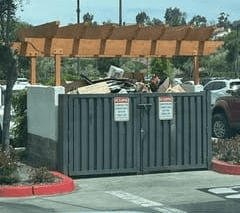
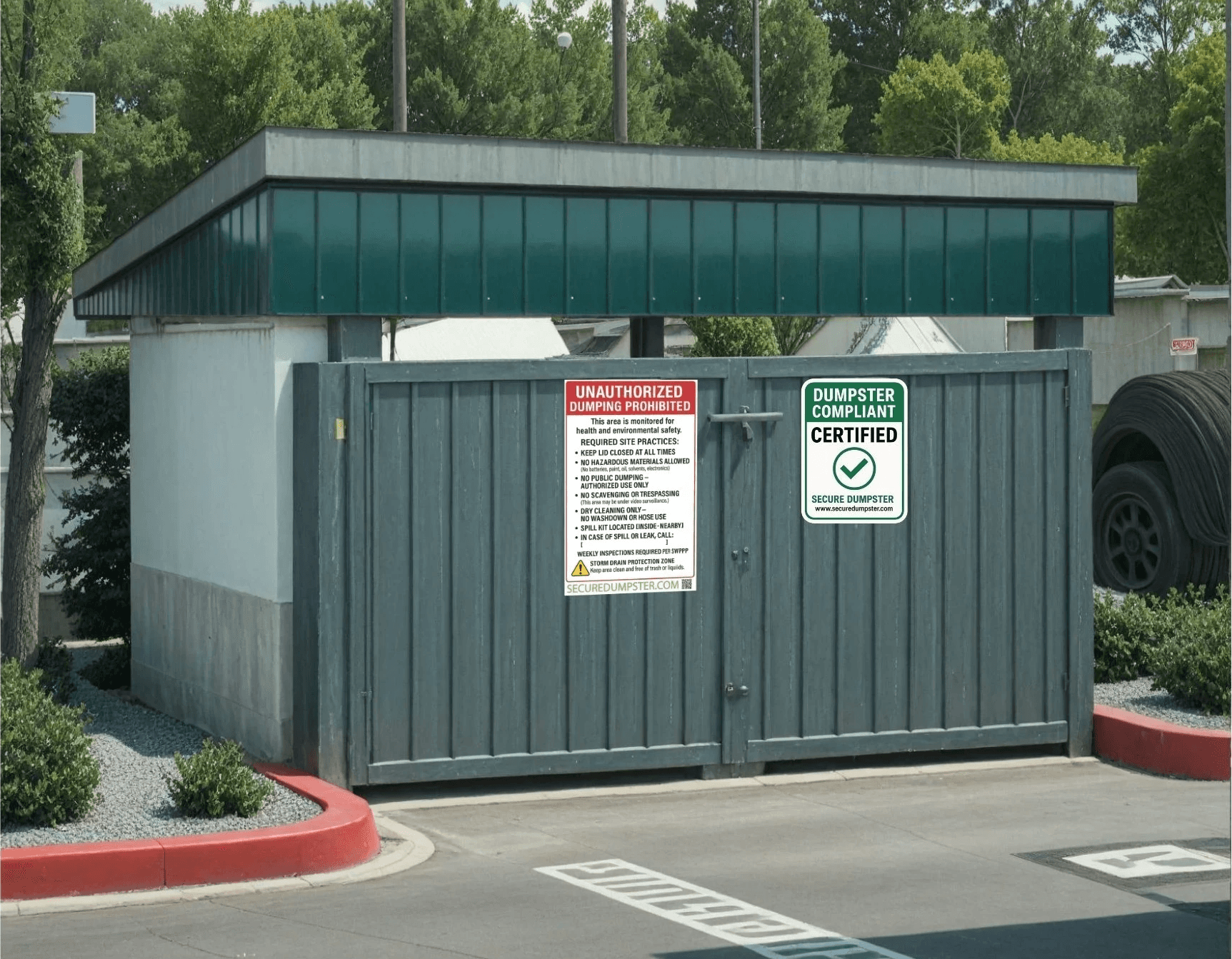
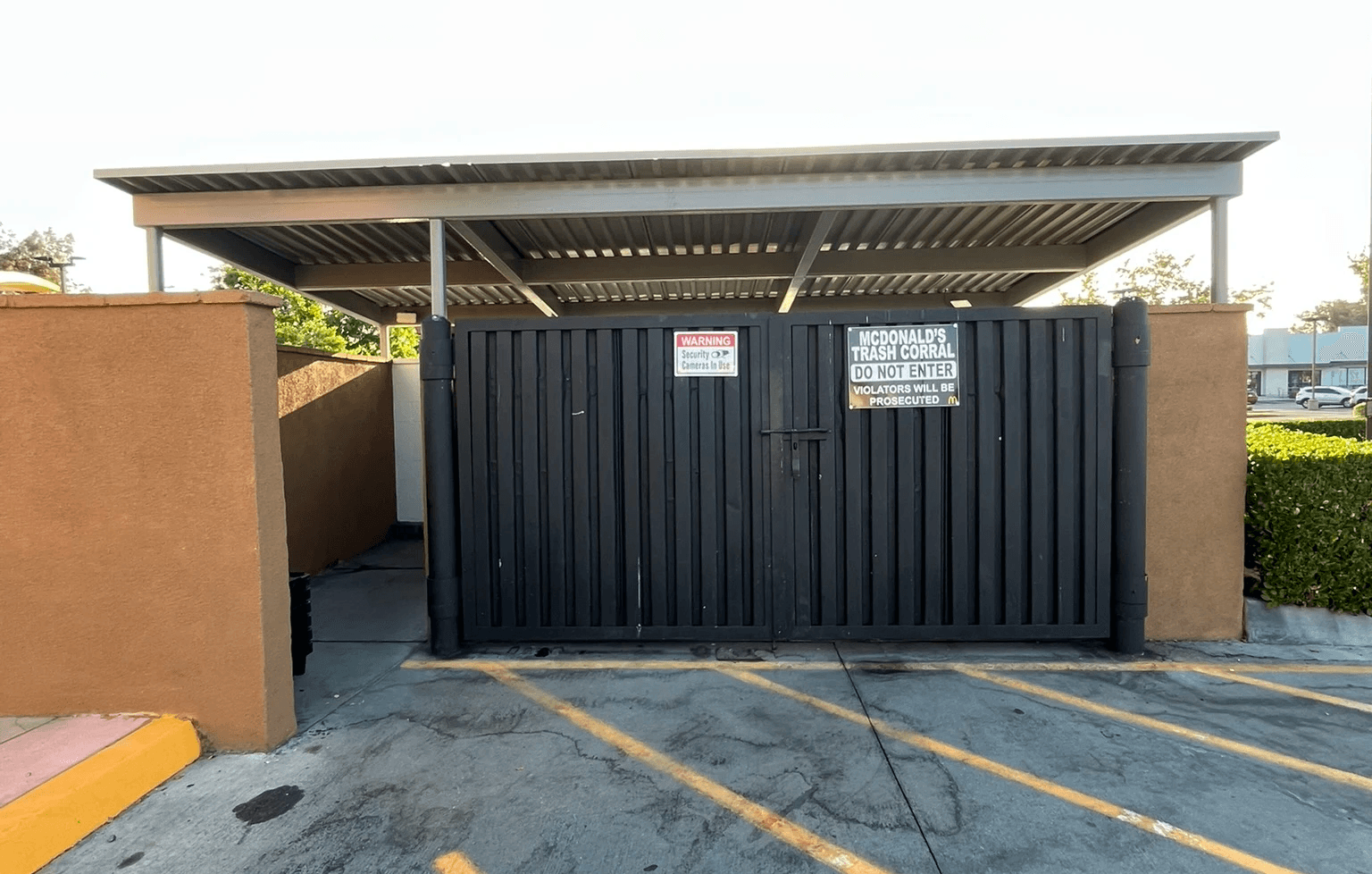
Dumpster and waste enclosure runoff is a recurring contributor to urban stormwater pollution across commercial, industrial, municipal, and multi-family environments.
When precipitation contacts exposed waste, it can mobilize:
Fats, oils, and grease (FOG)
Bacteria and organic contaminants
Solid waste debris and microplastics
These pollutants are frequently transported into storm drain systems and receiving waters, creating ongoing compliance challenges under MS4 permits and related regulatory frameworks.
Despite existing regulations, this source is often inconsistently addressed due to limitations in inspection frequency, documentation, and enforceability at scale.

Built for MS4 + SWPPP site readiness.
Technical Basis & Field Observations
Field observations and dimensional analysis indicate that standard front-load dumpsters can collect significant volumes of precipitation when left uncovered.
A typical 4-yard dumpster can receive up to 245 gallons of rainwater annually depending on regional rainfall
Once water contacts waste, it becomes contaminated and contributes to runoff pollution
Additional water weight can exceed 2,000 pounds, impacting handling and operations
Common real-world conditions contributing to this issue include:
Open or improperly closed lids
Damaged or aging containers
Inconsistent tenant or user behavior
Lack of ongoing inspection and documentation systems
These factors collectively create a persistent and scalable compliance gap.
Engineering Findings
Summary of observed conditions and technical considerations based on field experience and initial engineering review.
DOCUMENTED POLLUTION RISK
Illicit discharge associated with dumpster runoff
Transport of FOG, bacteria, and organic pollutants
Non-point source contamination pathways
Common gap in MS4 inspection and enforcement programs
MEASURED IMPACT
Up to 245 gallons of precipitation per dumpster annually
Over 2,000 lbs of potential contaminated load
Increased likelihood of runoff, leakage, and discharge
Degradation of recyclable materials due to saturation
SOURCE CONTROL OPPORTUNITY
Reduce leachate generation at the source
Improve consistency of compliance conditions
Address common field conditions (open lids, damage, misuse)
245 Gallons
Annual precipitation exposure per uncovered dumpster
~2,000+ lbs
Potential contaminated load from captured water
MS4-Aligned
Supports inspection, documentation, and compliance programs
Integrated Source Control and
Compliance System
Secure Dumpster™ (Structural Best Management Practice)
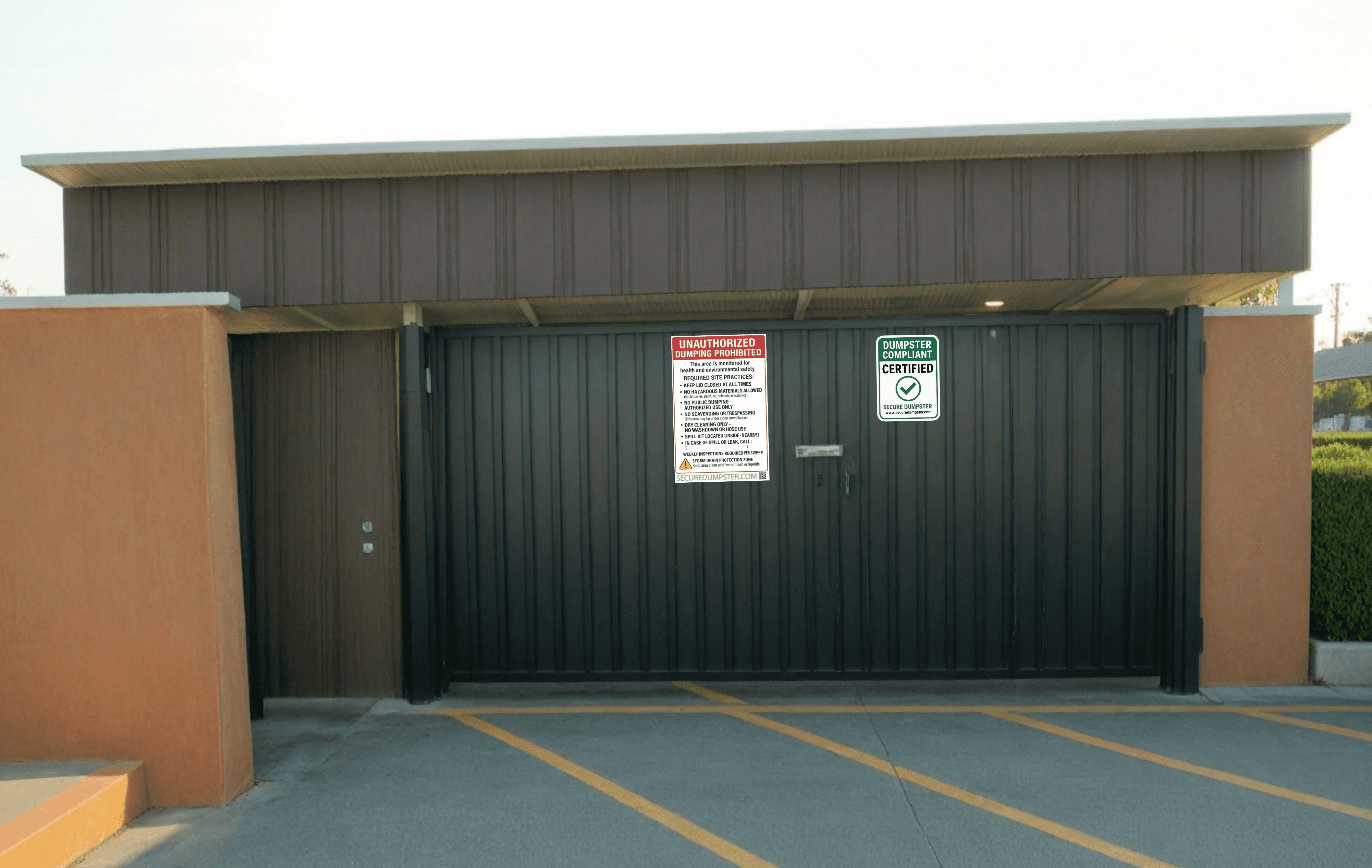
A physical containment system intended to reduce precipitation exposure to waste materials at the source.
Minimizes leachate generation
Reduces potential for contaminated runoff
Improves consistency of site housekeeping conditions
Addresses common field conditions (open lids, damage, misuse)
StormwaterIQ™ (Inspection & Documentation Platform)
A digital system designed to support inspection, verification, and documentation of stormwater compliance conditions.
Time-stamped and geospatial inspection records
Photo-based condition documentation
Site-level tracking and reporting
Supports defensible compliance documentation for regulatory programs